על הקיר, בבתי כנסת אמיתיים
On the wall, in real shuls
בית הכנסת הראשון שהתקין את הלוח. אלו צילומים של המסך התלוי שם, כפי שהוא נראה באמצע יום חול רגיל — לא הדמיה ולא צילום מסך.
The first shul to put the board up. These are photographs of the screen hanging there, in the middle of an ordinary weekday — not a mock-up and not a screenshot.
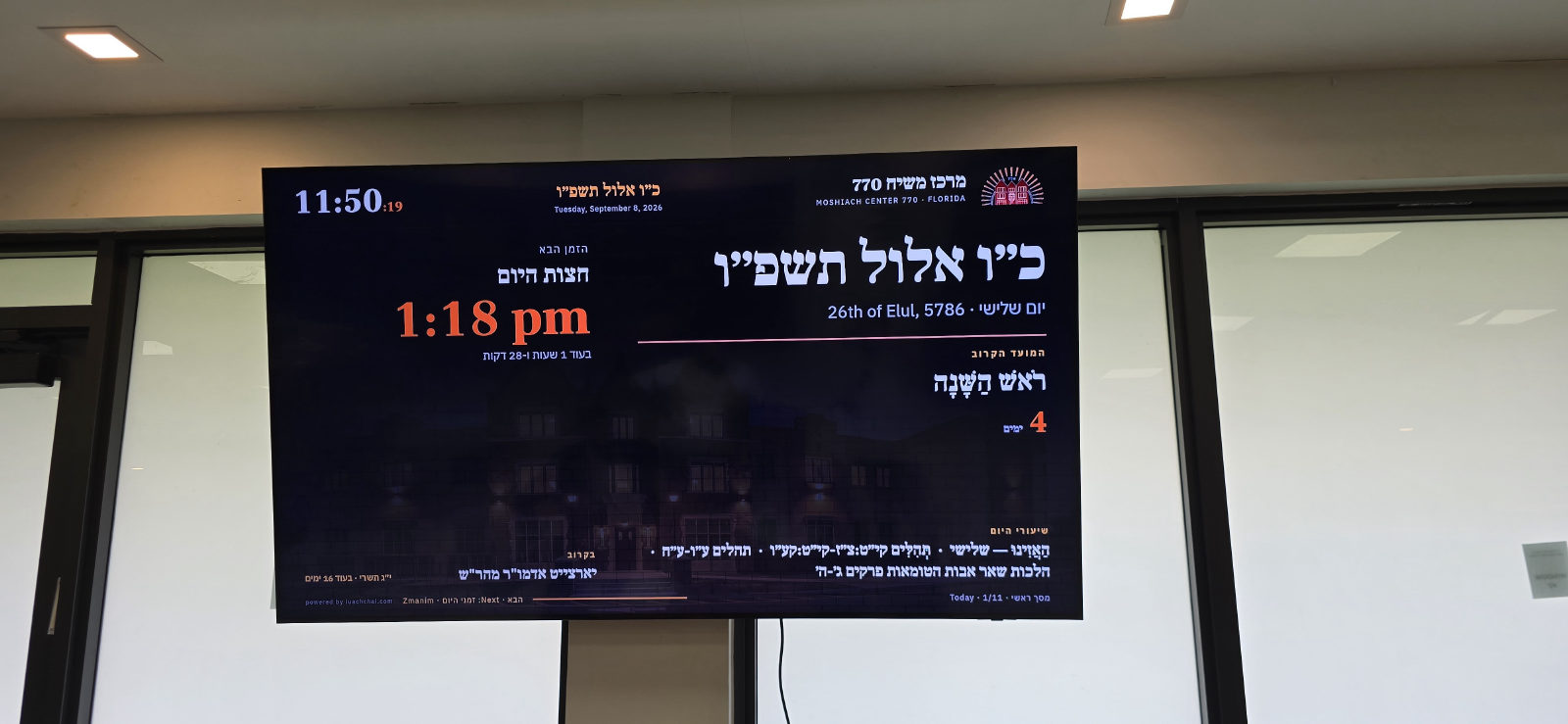
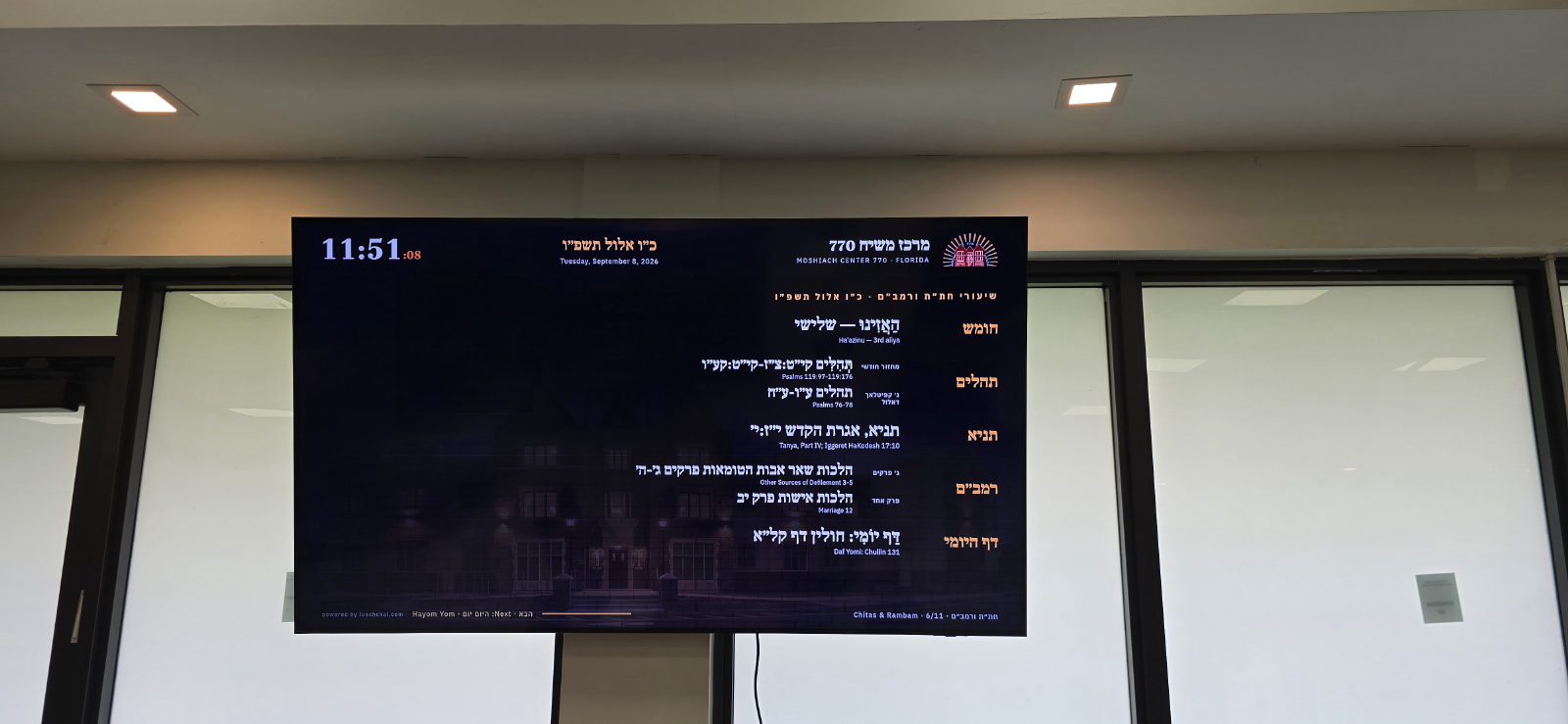
הלוח תלוי שם ורץ מעצמו. אף אחד לא נוגע בו ביום־יום: התאריך העברי, הזמנים, חת״ת ורמב״ם והמסכים המתחלפים — הכול נקבע מהיום שבו הוא נמצא.
It hangs there and runs itself. Nobody touches it day to day — the Hebrew date, the zmanim, Chitas and Rambam and the screens changing over all follow from the day it is.
הגבאי לא צריך לגעת במסך. פעם היינו מדפיסים דף חדש כל שבוע ותמיד היה משהו לא מעודכן — זמן שהשתנה, יארצייט ששכחנו. עכשיו זה פשוט נכון, כל יום, לבד.
The gabbai does not have to touch the screen. We used to print a new sheet every week and something was always out of date — a time that had changed, a yahrzeit we forgot. Now it is simply right, every day, by itself.
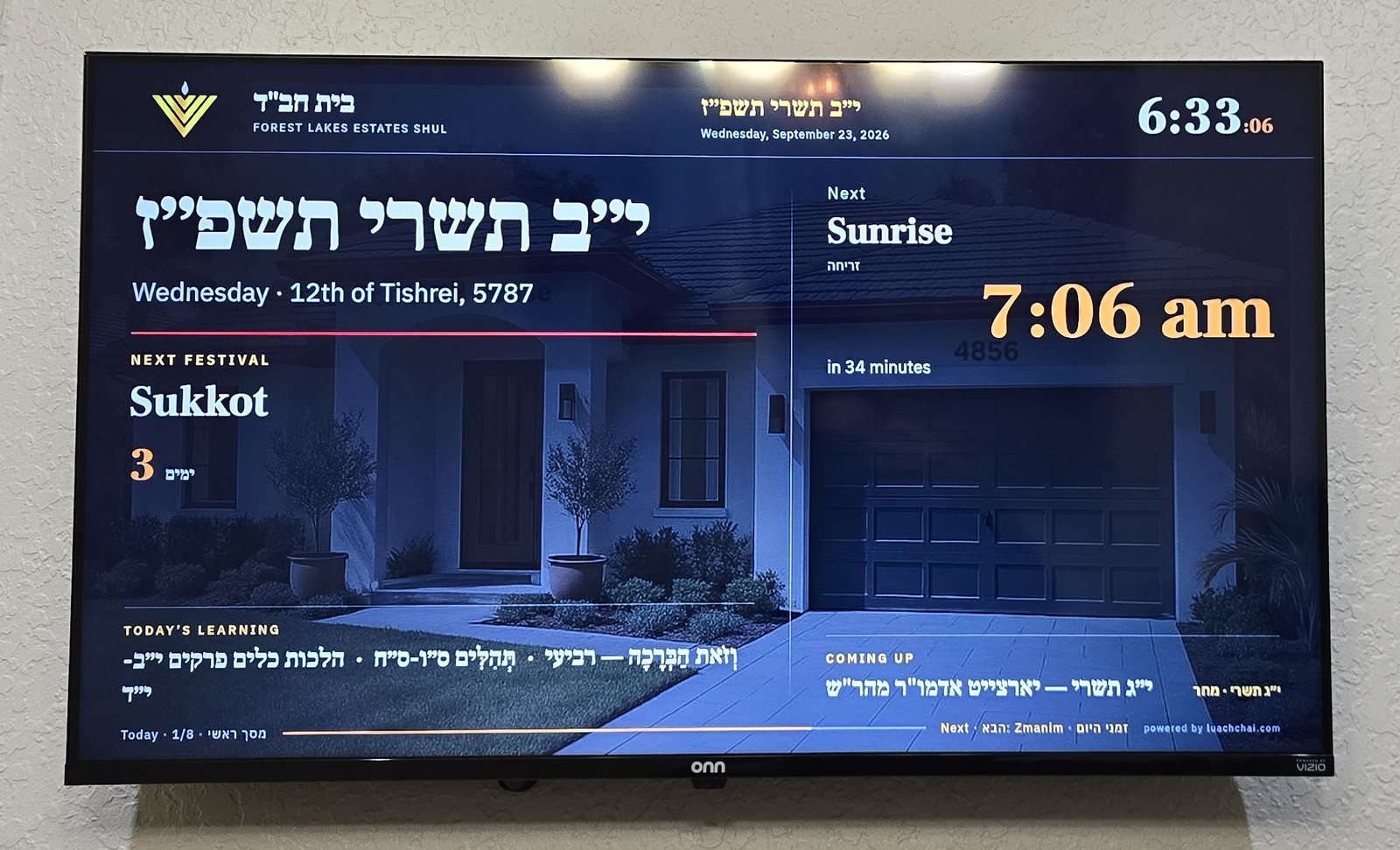
כאן אין חיבור לאינטרנט. הלוח התחבר פעם אחת כדי להיטען, ומאז הוא רץ לבד: התאריך העברי, הזמנים, חת״ת ורמב״ם, הפרשה והיארצייטים — הכול מחושב על המכשיר עצמו, לפי המיקום של בית הכנסת, כל יום מחדש.
There is no internet here. The board connected once to load, and has run by itself since: the Hebrew date, the zmanim, Chitas and Rambam, the parsha and the yahrzeits are all worked out on the screen itself, for the shul's own location, fresh every day.